
Google Business Profile Optimisation That Wins Leads
Published on: 25th September 2026
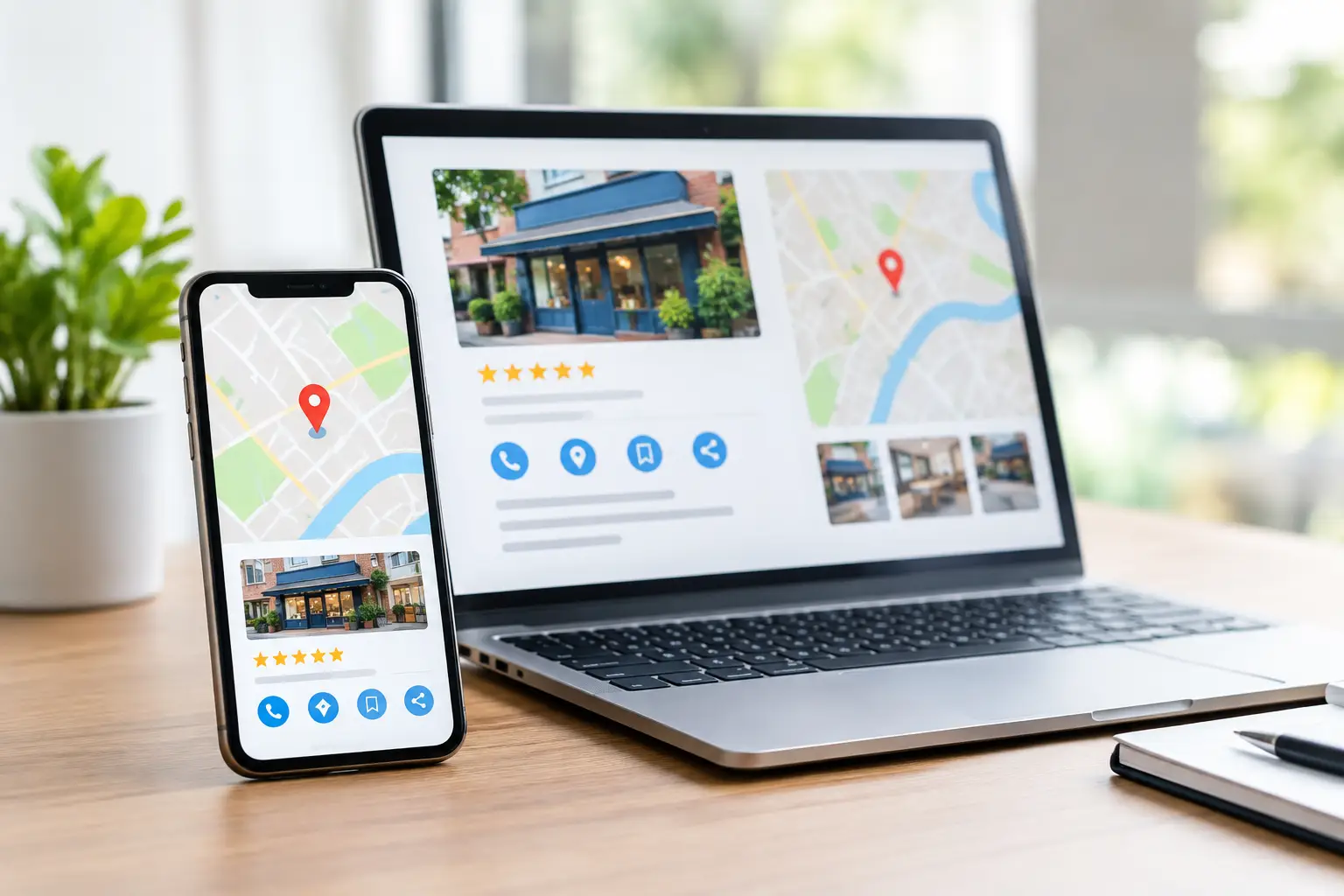
When someone searches for “electrician near me”, “best restaurant in Ramsgate” or “plumber in Margate”, they are usually ready to act. Google Business Profile optimisation helps your business show up at that decisive moment with the right information, credible reviews and a clear reason to get in touch.
For many local businesses, the profile is the first interaction a potential customer has with the brand. Before they visit your website, they can see your opening hours, phone number, photographs, location, services and customer feedback directly in Google Search and Maps. An incomplete or poorly managed profile can quietly send enquiries to a competitor, even when your service is better.
Why your Google Business Profile matters locally
A Google Business Profile is not simply an online directory listing. It is a key part of your local search presence and a practical lead-generation tool. It can place your business in front of people within your service area without requiring them to search through pages of results.
This is especially valuable for businesses across Thanet and Kent where customers often choose convenience, availability and trust quickly. A homeowner with a leaking boiler, a visitor looking for somewhere to eat, or a facilities manager seeking a fire safety contractor may compare several profiles in a matter of minutes.
Your profile needs to answer their immediate questions: what do you do, where do you work, when are you available, and why should they choose you? If the answer is unclear, outdated or less convincing than nearby competitors, the click may never happen.
A well-managed profile also supports your wider digital marketing. It reinforces the services described on your website, gives Google consistent information about your business and creates another route for calls, direction requests, website visits and messages.
Start with accurate business foundations
The first job is straightforward but often overlooked: make every important detail correct. Your business name should match the name customers know you by. Avoid adding locations, services or promotional wording to the business name just to target more searches. It can look unprofessional and may create verification or suspension issues.
Choose the most accurate primary category for your main service. This tells Google what type of business you are and has a real influence on the searches where you may appear. A heating engineer, for example, should not rely on a broad category if a more precise option reflects the core work. Relevant secondary categories can help, but only where they represent services you genuinely provide.
Add your telephone number, website address, trading hours and service area carefully. If customers visit your premises, publish the address and make sure the pin is in the right location. If you travel to customers, such as a plumber, electrician or mobile beauty business, set up a service-area profile instead. Do not use a virtual office or an address where you are not genuinely customer-facing.
Opening hours deserve particular attention. Update them for bank holidays, seasonal changes and temporary closures. Few things damage confidence faster than a customer travelling to a venue that Google says is open, only to find the doors shut.
Make Google Business Profile optimisation useful to customers
A profile should not read like a collection of keywords. It should make choosing your business easier.
Write a clear business description in plain English. Lead with what you do, who you help and the areas you cover. A Thanet-based electrical contractor could explain the domestic and commercial work it undertakes, whether it handles emergency call-outs, and the towns it serves. A restaurant might focus on its cuisine, atmosphere, booking arrangements and dietary options.
Use the services section to list meaningful individual services, rather than repeating broad phrases. This gives prospective customers more context and helps Google understand the relevance of your profile. Keep the wording accurate. Promising same-day work, 24-hour availability or specialist accreditation when you cannot consistently provide it may attract the wrong enquiries and create difficult conversations later.
Attributes can also make a difference. Depending on your business type, these may show accessibility details, outdoor seating, appointment requirements, payment options or delivery information. They are small details, but they help customers rule a business in or out before they call.
Use photographs to show the real business
Local customers are cautious, particularly when they are choosing a contractor or spending money on a service they have not used before. Genuine, current photographs reduce that uncertainty.
Show the outside of your premises where relevant, your team at work, completed projects, products, vehicles, menus, treatment rooms or behind-the-scenes preparation. For trades and professional services, clear before-and-after images and finished work can be more persuasive than a generic stock photograph. For hospitality, well-lit images of food, drinks, seating and the atmosphere give people a much better sense of what to expect.
Quality matters, but authenticity matters too. You do not need an elaborate photoshoot for every update. A regular supply of tidy, well-framed images from real work helps demonstrate that the business is active and established.
Avoid uploading images that are heavily filtered, out of date or unrelated to the service. If a customer arrives expecting one thing and finds another, the result is rarely a positive review.
Build a review process, not a one-off push
Reviews are one of the strongest trust signals on a Google Business Profile. They give potential customers evidence that you do what you say you will do. They can also reveal what people value most about working with you, whether that is fast attendance, friendly service, high-quality workmanship or clear communication.
The most effective approach is to ask consistently after a completed job, purchase or visit. Make it easy for happy customers to leave feedback while the experience is still fresh. A simple follow-up message is usually enough, provided it feels personal and is sent at an appropriate time.
Do not offer discounts, gifts or other incentives in exchange for reviews. Do not ask staff, friends or family to create artificial feedback either. Reviews need to be genuine, both for customer trust and for compliance with Google’s policies.
Replying matters just as much as collecting them. Thank customers by name where appropriate, refer to the service they received and keep the response professional. If a review is critical, resist the urge to argue publicly. A calm response that acknowledges the concern and offers to resolve it offline shows future customers that your business takes accountability seriously.
Keep the profile active with meaningful updates
A profile that has not changed in two years can still rank, but it may not give customers much confidence. Regular updates show that the details remain current and give you opportunities to highlight useful information.
Posts can promote a seasonal service, recent project, special menu, new product line or upcoming event. They work best when there is a clear customer benefit rather than a vague sales message. A heating business might remind customers about boiler servicing before winter. A restaurant could promote a new lunch menu or festive booking availability.
The questions and answers section also needs monitoring. Customers may ask about parking, lead times, accessibility, booking, pricing or service coverage. Helpful answers remove barriers to enquiry, while unanswered questions can make a business appear difficult to reach.
For businesses with several locations, consistency becomes even more important. Each branch should have its own accurate profile, contact details, photographs and opening hours. Copying identical descriptions across every location is rarely helpful. Customers want information relevant to the branch they will actually visit or contact.
Measure enquiries, not just views
It is satisfying to see profile views rise, but visibility only has commercial value if it contributes to your goals. Review the actions customers take: phone calls, website clicks, direction requests, bookings and messages. These provide a clearer picture of whether your profile is bringing in potential work.
Look for patterns. If lots of people view the profile but few visit the website or call, your categories, description, imagery or reviews may not be answering their questions. If calls increase after you add a particular service, post or project image, that is useful evidence for future content.
Results also depend on the market. A well-optimised profile cannot guarantee the top map position for every search, especially in competitive sectors or large service areas. Distance, searcher location, competition and Google’s own ranking systems all play a part. The objective is not to chase a single ranking screenshot. It is to make your business the clearest, most credible choice for the local customers you want to reach.
Bring your profile into your wider marketing
Google Business Profile optimisation works best when it is connected to the rest of your online presence. Your website should provide fuller information on the services, locations and expertise shown in the profile. Your social media can reinforce recent work, team activity and customer stories. Paid advertising can support high-value services when organic visibility alone is not enough.
This joined-up approach also prevents the common problem of conflicting information. If your website says one opening time, your social channels say another and Google says something else, customers are left to guess. A single, well-managed digital setup creates a more professional impression and makes your marketing easier to maintain.
For busy business owners, the priority is not adding another platform to the to-do list. It is ensuring the profile customers already use has accurate information, persuasive proof and a simple path to contact you. A few well-managed details can be the difference between being found locally and being chosen locally.