
Conversion Rate Optimisation for Websites
Published on: 28th September 2026
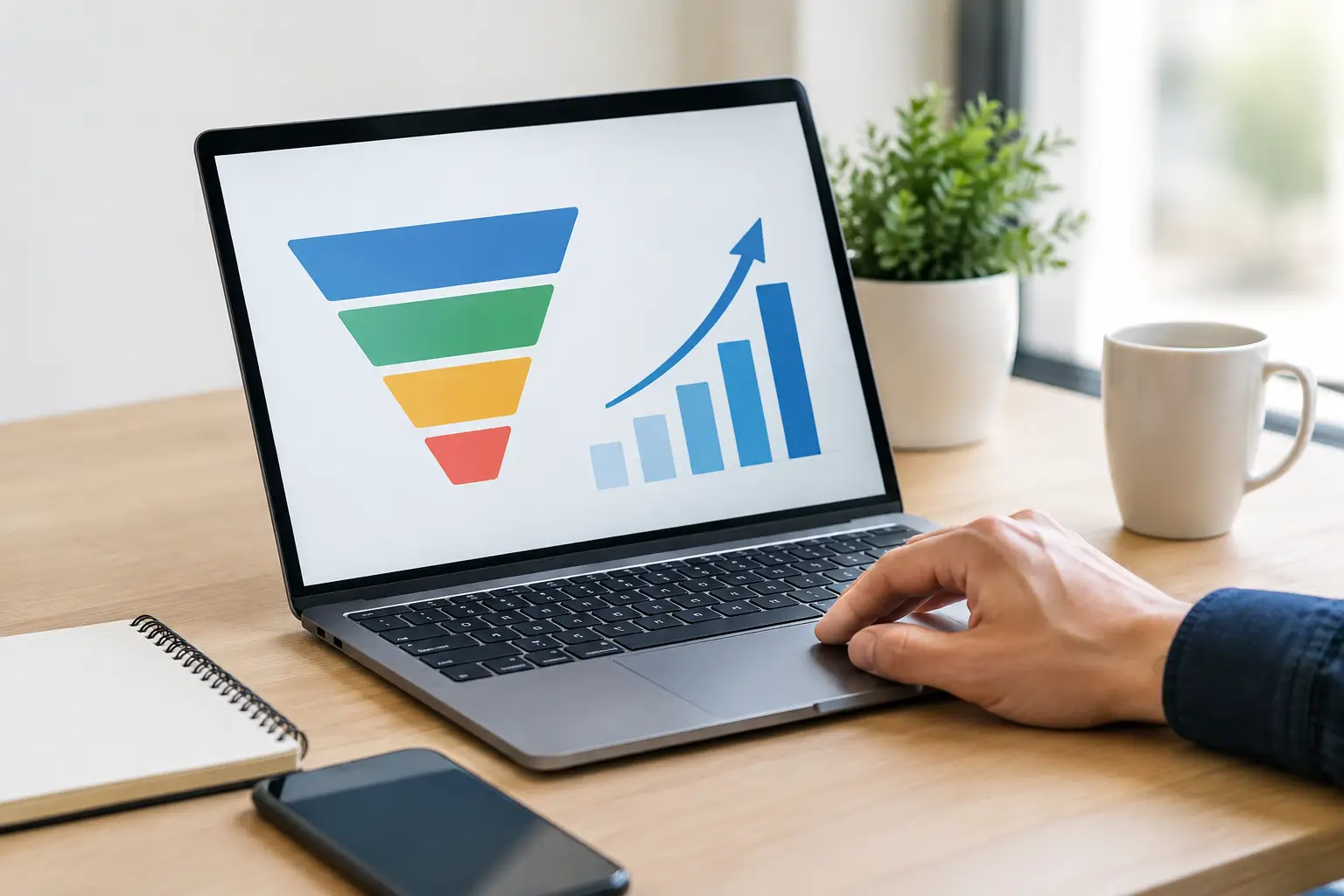
A website can attract plenty of visitors and still leave your phone quiet. If people cannot quickly see what you offer, why they should trust you or how to get in touch, they will simply move on. Conversion rate optimisation for websites focuses on fixing those moments, helping more of the people already visiting your site become genuine enquiries, bookings or customers.
For a business in Thanet or across Kent, this is not about chasing flashy design trends or making changes for the sake of it. It is about making your online platform work harder for the business behind it. A clearer service page, a more prominent call button or a simpler enquiry form can make a meaningful difference when a potential customer is comparing local options.
What conversion rate optimisation means for your business
Your conversion rate is the percentage of website visitors who complete a valuable action. For a plumber, that could be requesting a call-back. For a restaurant, it may be making a table booking. For an e-commerce business, it is usually completing an order. Professional services may value consultation requests, brochure downloads or telephone enquiries.
Conversion rate optimisation, often shortened to CRO, is the process of understanding what prevents people from taking that action and improving the journey. It connects web design, content, search visibility and paid advertising. There is little value in paying for more clicks through Google Ads or ranking well in search if the landing page gives visitors reasons to hesitate.
The right target depends on your business model. A high-value electrical installation firm may need fewer, better-qualified enquiries, while a local café may want a fast route to bookings, directions and menu information. The aim is not to inflate a number in a report. It is to generate more commercially useful opportunities.
Start with the customer journey, not a redesign
Many owners assume a weak conversion rate means the website needs to be rebuilt. Sometimes it does, particularly if it is slow, difficult to use on a mobile or no longer represents the quality of the business. Often, however, the biggest gains come from focused changes to the pages people already visit.
Start by considering the route a customer takes. Someone searching for an emergency heating engineer has different needs from someone researching a planned bathroom renovation. The first wants reassurance, availability and a phone number immediately. The second may need examples of completed work, service details, reviews and a simple way to arrange a quote.
A useful website anticipates those needs without making visitors work for the information. Every key page should answer a few practical questions quickly: what do you do, where do you work, why should someone choose you, and what should they do next?
Make the next step obvious
A page can be attractive and informative but still underperform if its call to action is vague or buried. “Get in touch” has its place, but a more specific instruction can reduce uncertainty. Depending on the service, that might be “Request a free quote”, “Book a consultation”, “Call for emergency support” or “Check availability”.
Use the action consistently in sensible places: near the top of the page, after important information and at the end. On mobile, where many local searches happen, a tap-to-call option can be particularly valuable. The goal is to make contact easy, not to pressure visitors into a decision before they are ready.
Remove unnecessary friction
Every extra hurdle can cost an enquiry. Long forms, unclear error messages, mandatory fields that do not feel relevant and pages that load slowly all create friction. A quote form rarely needs a customer to complete ten fields before they can ask for help.
Shorter forms typically encourage more submissions, although there is a trade-off. If your team spends time following up unsuitable leads, asking one or two qualifying questions may be worthwhile. The best approach balances completion rate with lead quality, then reviews the result rather than relying on assumptions.
Build confidence before asking for the enquiry
Local businesses are often chosen on trust. A homeowner inviting a tradesperson into their property, or a company selecting a web partner, wants evidence that they will receive reliable service. Your website needs to make that confidence visible.
Clear service descriptions matter because customers should not have to guess whether you handle their specific job. Explain your process in plain English, show relevant areas you cover and make pricing expectations clear where possible. If a fixed price is not realistic, explain what affects the cost and how the quotation process works.
Reviews, project examples and recognisable accreditations can also reassure people at the point of decision. They work best when they are relevant and specific. A review that mentions punctuality, communication and a successful result is more useful than a generic five-star statement. Likewise, a portfolio should show the kind of work you want more of, not simply everything you have ever completed.
Photography has a role here too. Original images of your team, premises, completed installations or products give a website credibility that stock photography cannot always provide. For hospitality and retail businesses especially, customers want to see what they can expect before they visit.
Use data to find the real problem
Website decisions should be guided by evidence, not just personal preference. Analytics can show which pages receive visits, where visitors leave, what devices they use and whether they complete key actions. Call tracking, form submissions and booking data add the commercial context that traffic figures alone cannot provide.
For example, a service page may attract strong search traffic but receive few enquiries. The issue could be that the page does not match the search intent, the call to action is weak or it lacks the information customers need before making contact. If most visitors leave on mobile, check the mobile experience first rather than assuming the written content is the problem.
It is also worth separating traffic sources. Someone arriving through a branded search already knows your business and may be ready to act. A visitor from a broader Google Ads campaign may need more reassurance. Sending both groups to the same generic page can limit results. Purpose-built landing pages are often useful for specific services, locations or advertising campaigns.
Test improvements one priority at a time
Conversion rate optimisation for websites is a continual process, not a one-off checklist. Make a considered improvement, measure the outcome and then decide what to address next. Changing the page layout, headline, imagery, offer and form at the same time may produce a result, but it makes it difficult to understand what actually helped.
Prioritise pages that already have meaningful traffic or directly support revenue. For many local businesses, that means core service pages, contact pages and the pages used for paid campaigns. A small improvement on a frequently visited page can be more valuable than extensive work on a page few people see.
Common areas worth testing include clearer headlines, stronger proof points, improved mobile layouts, faster page speed and alternative calls to action. A restaurant might test whether online booking performs better when availability is visible sooner. An e-commerce shop could review whether delivery costs and returns information are clear before checkout. A professional service firm may find that offering a short initial consultation produces more qualified enquiries than a general contact form.
Be patient with the data. Seasonal demand, weather, advertising spend and changes in search rankings can all affect results. A quiet fortnight is not always proof that a page change failed. Look for patterns over a suitable period and consider the quality of leads alongside the quantity.
Bring your website and marketing together
Your website should not operate separately from your SEO, advertising and social media. The message that earns a click should continue on the page that receives it. If an advert promises a fast local quote, the landing page should make requesting that quote straightforward. If social media highlights a recent project, interested viewers should be able to find similar work and contact details without searching around.
This joined-up approach also makes marketing budgets more efficient. Improving the conversion rate means you may generate more enquiries from the same level of traffic, rather than immediately increasing spend. It does not replace SEO or paid advertising, but it helps ensure the investment in visibility has a better chance of becoming revenue.
At Codex Web Development, this is why website design, search optimisation and paid campaigns are considered together. The practical detail matters: a fast site, clear messaging, reliable hosting and a contact journey that works properly on every device all support the same outcome.
A useful next step is to review your website as if you were a first-time customer with only a few minutes to decide. If the value of your service, the proof behind it and the route to contact are immediately clear, your website is already doing a better job of turning attention into opportunity.